Navigating a New Wave of Market Pressures
The world keeps moving fast. And so is NextPage.
This update covers what we’re watching in the supply chain, what we’ve already done to protect your projects, and what we need from you to keep things running smoothly. As always, I’ll be direct — because that’s how we do business.
The Supply Chain: Tariffs, Materials, and What It Means for Your Work
We’re operating in a global economy that’s repricing itself in real time. Tariffs on goods from Canada, Mexico, China, and potentially Europe are creating ripple effects across our industry. Here’s where we stand on the materials that matter most to your projects:
Paper
The good news: the United States has a strong domestic paper market, and that’s our primary sourcing foundation. Tariffs are reducing the range of available grades, weights, and specialty stocks, but we’ve secured commitments from our mill and distributor partners to keep your work moving. The better you plan, the more options we have to find the right fit at the best price.
Inks and Coatings
Ink costs are rising due to tariff pressure on chemical inputs. It remains a smaller share of overall project cost, but we’re managing it proactively — pre-securing supplies, identifying backup sources, and using production techniques that optimize ink consumption without compromising quality.
Labels and Specialty Materials
We received notice this week from a key supplier of roll label products. Pricing across their product line will increase 12.5% effective April 23, 2026, citing unprecedented disruption in energy, chemical, raw material, and logistics costs. If labels are part of your program, let’s talk now about timing and stocking strategies.
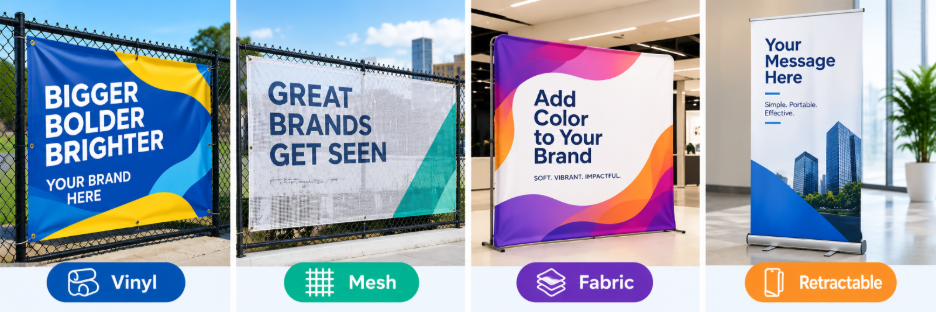
Large Format and Environmental Graphics
Substrate supply and specialty material options are tightening in this category as well. If you have signage, wall graphics, or printed board projects planned for later in 2026, early conversations will make a real difference.
Our Efforts in Better Supply Chain Management
The NextPage team meets with key suppliers on a weekly basis. We work to ensure we negotiate aggressively to meet pricing demands. We also have solid plans for managing the supply chain to ensure we meet delivery demands. Since 2021, we have purchased ahead to ensure we can meet the needs of our clients. While supply levels have fluctuated, we are continuously staying a step ahead of our competition because we work closely with our clients. That partnership ensures success.
Our Investment in the Future: New Technology, Less Waste, Better Value
While the market throws challenge our way, NextPage has been investing forward — not pulling back. Over the past year, we’ve completed a multi-million-dollar round of equipment investment specifically designed to give you more production flexibility, faster turnaround, and better cost control.
Komori Offset Press Overhaul and Curing System Upgrade
Our offset workhorse is our 8 color Komori GL Lithrone Offset Press. In the last 6 months we have refurbished this press from feeder to delivery and retrofitted the curing system to new LED curing technology. The steps we have taken ensure uptime for our clients, enhance our coating capabilities, and will allow us to continue offering unprecedented quality.
Canon ProStream 3160 + Contiweb DFA + MBO Coater – Integrated High-Speed Web Press System
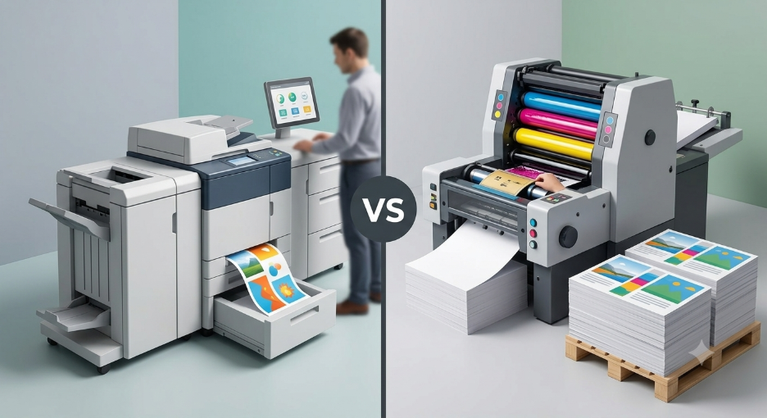
Our Canon ProStream 3160 is a production-grade continuous-feed inkjet press — and it doesn’t work alone. Inline with the ProStream is the Contiweb DFA dryer/folder unit and an MBO UV coater forming a single integrated production line from print to finished, coated sheet in one pass. Here’s why that matters to your budget:
- Less makeready waste. No plate setup, no ink draw-down. We reach sellable output faster, which means less substrate waste on every run.
- Inline aqueous and UV coating — no offline pass required. The MBO coater is integrated directly into the ProStream line. Coating happens in a single production pass, eliminating a separate handling step, reducing spoilage risk, and cutting turnaround time.
- Run-length flexibility. We can cost-effectively produce shorter quantities without the fixed overhead of traditional offset — so you print closer to what you actually need, reducing overstock and storage costs.
- No printing plates. With aluminum plates primarily imported from Canada and now subject to tariff pressure, eliminating plate dependency on eligible jobs is a direct cost protection strategy for your projects.
- Personalization at scale. Variable data, versioning, and targeted messaging execute on the same press run — increasing relevance and response rates without increasing cost per piece.
MBO Offline Finishing Line – Precision Folding and Cutting
Separate from the inline coater, our MBO offline finishing line handles complex folding, cutting, and bindery configurations for jobs that require dedicated finishing capacity:
- Precision folding and cutting. Tight registration and automated quality controls reduce waste from finishing errors — a meaningful cost driver on high-volume jobs.
- Expanded format flexibility. A wider range of fold patterns and finishing configurations gives your creative team more options without driving up costs.
- Dedicated finishing capacity. Complex jobs move through a purpose-built line rather than creating bottlenecks elsewhere in production.
Canon imagePRESS iX – Cut-Sheet Digital Production
Complementing the ProStream system, our Canon iX delivers exceptional cut-sheet digital quality for shorter runs, complex jobs, and premium substrate applications:
- High image quality on diverse substrates. The iX handles coated, textured, and heavier weight stocks with consistent, press-quality output.
- Fast to press on short runs. Where offset would require significant makeready cost and time, the iX gets to press-ready quickly — translating directly to client savings on lower-quantity work.
- Reduced inventory risk. Print what you need, when you need it. The iX supports on-demand production that eliminates the cost of overprinting and warehousing excess inventory.
Additional Digital Capacity – The Right Equipment for Each Project
The addition of the Canon equipment is simply one step to enhance an already exhaustive digital printing footprint at NextPage. We continue to run our HP T200 Inkjet Web Press for the right applications – low ink coverage work on offset stock. We run our HP 12000 digital sheetfed press for larger physical pieces with the 20” x 29” sheet, we run our fleet of “dry toner boxes” within our managed services department, and our large format digital print devices continue to run both roll fed and flatbed print projects. This large fleet of digital printing equipment offers extensive flexibility in meeting the needs of our clients no matter the quality or turn time requirements.
The bottom line: These investments aren’t just about capability — they’re about using less material to produce better work. In an environment where paper, ink, and substrate costs are all moving upward, smarter production processes are one of the most powerful tools we have to protect your budget.
The U.S. Postal Service: Surcharges, Midterms, and What’s at Stake for Your Mail
The USPS announced this week its first-ever fuel surcharge in its history — an 8% increase on package services including Priority Mail, Priority Mail Express, USPS Ground Advantage, and Parcel Select. The surcharge is pending approval by the Postal Regulatory Commission and is scheduled to take effect April 26, 2026, remaining in place through January 17, 2027.
Important for direct mail clients: This surcharge does NOT apply to First Class Mail, Standard/Marketing Mail, or postage stamps. Your letter mail and direct mail postage are not directly affected by this announcement.
That said, the broader financial picture at USPS warrants attention. The agency reported a $9 billion net loss in 2025, and Postmaster General David Steiner has indicated the agency is exploring stamp price increases and longer-term structural pricing changes. We’re watching this closely and will keep you informed.
Presorted Mail Offers Real Opportunity – Better Delivery Times and Real Cost Savings
For those clients with higher mail volumes, you have likely heard us discussing presorting or co-mingling your mail with other mailers. This can be a key opportunity for savings. We work closely with several “presort houses” and “comingle shops” who will sort mail from multiple print and client partners to obtain even deeper postal discounts.
We recently worked closely with a client who maintained their own relationship with a “presort house”. We simply transferred the mail to the presort house once produced on behalf of our client. We were finally able to get the client to share their payment arrangements with the third party. We were able to help them negotiate significant savings because we live mail day in and day out. The end result was a savings of $50,000 in one year.
Besides cost savings, this approach also allows us to better manage in-market delivery times, better mail handling, and overall logistics savings.
For clients using direct mail as part of their marketing mix — and the data continues to support that you should be — the value proposition remains strong. Direct mail still reaches every household, cuts through digital noise, and continues to deliver measurable ROI when integrated with digital campaigns. NextPage coordinates that integration for you.
The 2026 Midterm Election: A Real Capacity Pressure for Commercial Mailers
November 3, 2026 is a federal midterm election day — all 435 U.S. House seats, 33 Senate seats, and dozens of gubernatorial and statewide races are on the ballot. That matters to you as a commercial mailer for one straightforward reason: political mail competes directly with commercial print & mail for paper, print capacity, and postal bandwidth, and it does so with a structural advantage.
Under federal postal regulations, political campaign mail must be “promptly and efficiently” processed and delivered — it receives priority handling during election season. In the 2024 election cycle, the USPS delivered roughly 3.37 billion pieces of political and election mail. The 2026 midterms are expected to be even larger. Both parties’ national committees each spent over $43 million on printing and mailing in 2024, and competitive congressional and statewide races routinely carry mail budgets of $250,000 to $500,000 per race.
The volume spike hits hardest in September and October — exactly when many commercial mailers are executing fall campaigns, open enrollment, year-end fundraising, and holiday promotions. Here’s what that means operationally:
- Paper supply tightens. Print shops running high-volume political work consume large quantities of common commercial grades. Availability narrows, and prices can move quickly.
- Press time is finite. Production capacity across the industry gets absorbed by political mail during peak election season. Printers who haven’t committed to client schedules in advance will be managing a queue.
- Postal processing slows for commercial mail. When political mail receives priority handling, commercial and marketing mail moves through the system more slowly. In-home dates become harder to guarantee without early staging and strategic drop planning.
- Presorting and logistics get crowded. Presort bureaus, trucking, and postal entry points experience heavier throughput. Lead times for mail entry increase.
Our guidance: If you have any Q3 or Q4 programs — open enrollment, year-end appeals, holiday campaigns, fall promotions — plan and commit now, not in August. We can help you stage drops strategically to protect your in-home dates before political volume peaks. This is exactly the kind of early planning that separates programs that work from programs that get stuck in the system.
Smarter Targeting: Reduce Customer Acquisition Costs with BetterTargeting™
Rising production and postage costs make one thing more important than ever: every piece you mail needs to work harder. That’s exactly what BetterTargeting™ is built to do.
Traditional direct mail targeting is built on demographics — who someone is. Age, income, geography, household size. It’s a reasonable starting point, but it’s a blunt instrument. You’re mailing everyone who could be a buyer, whether or not they’re actually in the market right now.
BetterTargeting changes that equation. By layering intent data on top of demographic profiles, we identify prospects who are actively signaling purchase behavior — researching products, comparing options, engaging with relevant content. These are In-Market buyers, not just In-Demographic ones. The difference matters enormously when you’re managing a budget under pressure.
What BetterTargeting Delivers
- MicroTargeted audiences. We build precisely defined audience segments based on real-time behavioral signals, not just static list criteria. You mail to the people most likely to respond — not the broadest universe that might.
- Evergreen campaigns at scale. Rather than one-time batch-and-blast drops, BetterTargeting supports continuously running acquisition programs. As new In-Market prospects emerge, they enter the campaign. The machine keeps running without constant re-planning.
- Lower cost per acquisition. Smaller, smarter audiences mean lower postage and production spend per campaign. More importantly, higher response rates mean lower cost per acquired customer — the metric that matters to your marketing budget.
- Reduced waste at every level. Fewer pieces mailed to unqualified prospects means less paper, less postage, and less production cost spent on mail that was never going to convert.
The strategic shift: BetterTargeting lets you move from asking “who should we mail to?” to “who is ready to buy right now?” In a cost-pressured environment, that’s not a nice-to-have. It’s how you protect your acquisition ROI while managing spend.
If you’re currently running any acquisition-focused direct mail program — or you’ve been hesitant to start one because of cost concerns — this is the conversation to have. Ask us about BetterTargeting.
What NextPage Is Doing
We’re not waiting for problems to arrive. We’re managing ahead of them:
- Domestic paper commitments are secured. We’ve locked in supply with key mills and distributors to protect availability and pricing across our most-used grades.
- Pre-buying ink and specialty materials. Where supply windows are tightening, we’re building strategic inventory to protect your timelines.
- Investing in production technology. Our Canon ProStream 3160 system — with integrated Contiweb DFA and MBO coater — plus our Canon iX and MBO offline finishing line reduce plate dependency, cut waste, and give us more ways to solve production challenges efficiently.
- Smarter targeting for better ROI. BetterTargeting helps clients stretch marketing budgets by reaching In-Market buyers rather than broad demographic pools — reducing cost per acquisition while maintaining campaign scale.
- Election-season capacity planning. We’re already scheduling around midterm print volume pressure. Clients who commit early get protected slots. Don’t wait.
- Second and Third shift expansion. We’ve grown our production capacity to handle increased volume and larger jobs without compromising turnaround.
- Supplier monitoring. We’re translating supplier communications — like the Mactac pricing notice — into real-time planning guidance for our clients as quickly as possible.
- Artwork review. We occasionally find that small changes to artwork that reduce ink utilization can result in savings worth a discussion. On a recent project for envelopes, we were able to adjust an inside tint that resulted in $1,000 plus in savings. Our job is to highlight these opportunities. You get to decide if these types of recommendations are worth consideration.
What We Need From You
Three things — same as always, because they work:
Plan Early
If you have projects in Q3 or Q4, let’s start the conversation now. Election season print and postal capacity is finite and fills fast. Material availability, scheduling, and pricing are all easier to manage when we have lead time. We are in April” — don’t wait until June to tell us about your fall campaigns. Any estimate we provide is valid for 7 days given current raw material volatility, but if you’re planning months out, we’ll work with you to build a budget framework and secure raw materials.
Stay Flexible
If a stock weight, finish, or substrate isn’t available, we’ll find you a solution that protects your brand standards. Our expanded digital production capabilities give us more ways to solve problems than ever before. The more flexibility you can give us, the more options we can bring to the table.
Communicate
Tell us your plans — even rough ones. A heads-up on volume or timing changes helps us manage inventory and scheduling on your behalf. We will do the same for you.
The NextPage team is doing what we do — moving fast, managing complexity, and protecting your ability to execute. We’ve navigated paper shortages, pandemic disruptions, and postage changes before. We’ll navigate this too.
As always, reach out. I’d rather talk too early than too late.
Thank you for your business and your trust.
Gina M. Danner :: CEO
ginad@gonextpage.com | 816.459.8404
goNextPage.com
P.S. If large format graphics, environmental signage, or wall graphics are on your radar for 2026, give us a call. Our expanded large format capabilities — backed by our new production infrastructure — are ready to work for you. Early planning on substrate and material sourcing will pay off.
.