Key Takeaways
- Every piece in the run looks different — name, image, offer, QR code — and the press never stops.
- People respond more when the mail feels like it was written for them. That is what personalized direct mail does.
- You can test two versions in the same run, measure which one works, and scale the winner.
- Unique identifiers and PURLs in data-driven direct mail tell you exactly who responded and what they did next.
- No minimums. Fast turnaround. VDP works at any campaign size.
Think of variable data printing as mail merge’s more capable sibling. Where mail merge drops a name into a template, VDP printing changes the design, the message, the images, and the offer — all per recipient, all in one run.
VDP works for nearly any campaign. It pulls from available data — location, purchase history, behavior — and uses it to make each piece feel like it was built for that specific person. The result is variable data print marketing that earns higher open rates, drives stronger response, and gives marketing teams measurable attribution at every stage.
1. Personalized Direct Mail Gets Higher Response Rates
Personalized direct mail consistently produces higher response rates than generic campaigns — because when a recipient sees their name, their address, and a message that reflects what they actually care about, they respond differently than they do to a piece clearly sent to thousands.
Small details matter. The consumer’s name on the piece. An offer tied to their last purchase. A follow-up that acknowledges what they ordered. Ferrellgas saw this firsthand — after implementing NextPage’s personalized direct mail automation, their customer response rate doubled from 15% to 30%. The creative did not change. The personalization did.
2. Customize Images, Fonts, and Colors for Every Recipient
One of the practical advantages of VDP printing is the ability to run a standardized template with variables that change per recipient — different images, different messages, different offers — all within the same production run. This is what makes A/B testing in direct mail actually useful: instead of running two separate campaigns at different times, you send both versions simultaneously and compare results with identical conditions.
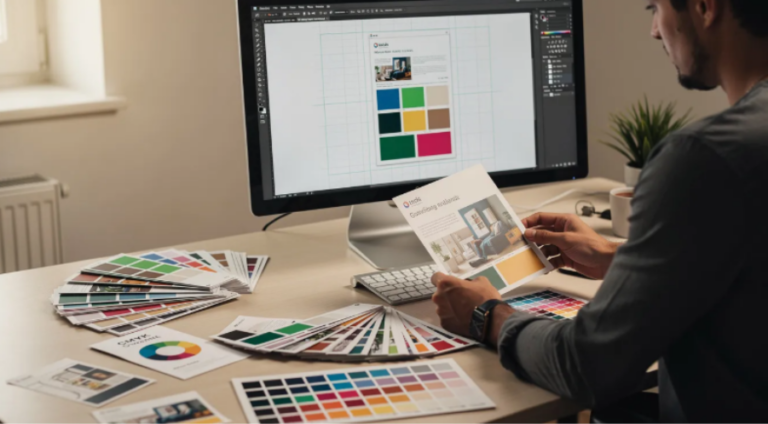
Visual customization goes further than just the copy. Print personalization through VDP lets you match color schemes, fonts, and imagery to the audience segment you are targeting. A piece aimed at a younger, energetic audience can carry bold colors and punchy type. A piece aimed at a professional audience can carry a cleaner, more restrained design. Both come off the same press, in the same run.
3. VDP Printing: Short Runs, Fast Turnaround, No Minimums
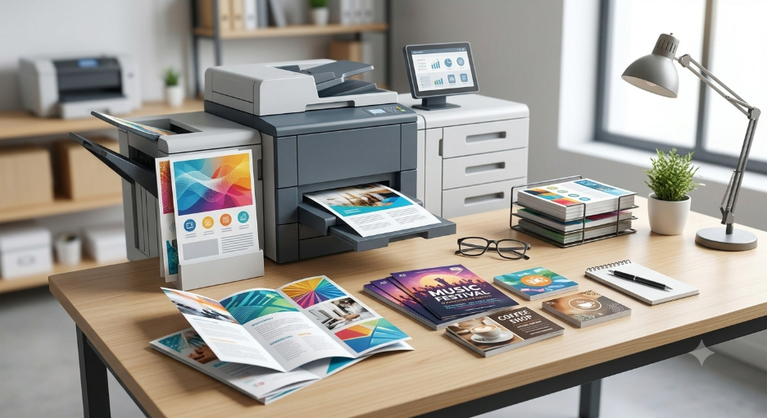
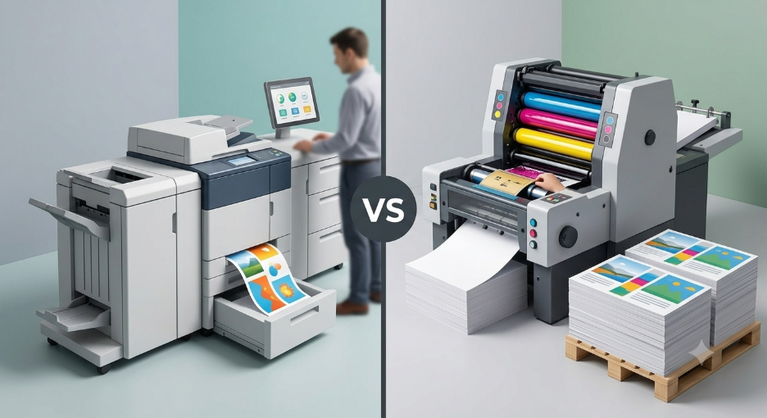
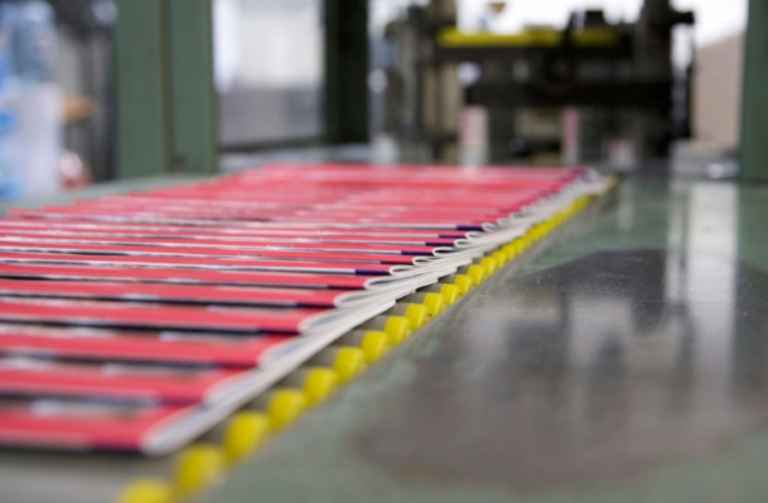
Variable data printing is digitally produced. Digital presses are highly adaptable — text, numbers, images, and layouts change between pieces without stopping the run or accruing downtime. There are no makeready costs and no offset printing plates, which is why most VDP printing has no order minimums. Whether you need 100 copies or 10,000, prep time is the same.
This makes variable data printing cost-effective for short campaigns, test runs, and regional variations where ordering a large quantity is impractical. You print what you need, when you need it, without committing to volume that may go to waste.
Talk to NextPage About Your VDP Campaign →
4. Better Campaign Tracking with Variable Data Print Marketing
Data-driven direct mail gives you something generic campaigns cannot: attribution. Every piece in a variable data print marketing campaign can carry a unique identifier — a barcode, an offer code, or a personalized URL — that tells you exactly which recipient responded, when, and through which channel.
Receipt rates, open rates, and conversion rates all become measurable when every piece is uniquely trackable. That is not just useful for reporting — it is what makes each campaign smarter than the last. When you know which segment responded and which did not, the next campaign starts from a stronger position.
5. PURLs: Close the Loop Between Print and Digital
A PURL — personalized URL — is a unique web address assigned to each recipient in a personalized direct mail campaign. When the recipient visits their PURL, you know exactly who came, what they looked at, and whether they converted. Even if they do not convert on the first visit, the data gives your team what it needs to follow up.
PURLs are one of the clearest examples of how data-driven direct mail and digital marketing reinforce each other. The physical piece drives the visit. The PURL tracks it. The follow-up closes it. NextPage builds PURL capability directly into VDP campaign workflows — so the print and digital tracking are connected from the start, not patched together afterward.
Ready to Start Your Next VDP Campaign? Let’s Chat →
Frequently Asked Questions
What is variable data printing?
It is a printing process where every piece comes out different — different name, different offer, different image — without the press stopping between them. The whole design changes per recipient in variable data printing, not just the address line.
How does VDP printing improve direct mail response rates?
When the piece feels like it was made for the person holding it, they act on it more often. Ferrellgas doubled their response rate from 15% to 30% after NextPage implemented personalized direct mail automation. Same creative. Different level of personalization.
What is the minimum order quantity for variable data printing?
There is no minimum. No plates means no setup cost to recover, so 100 copies costs proportionally the same as 10,000. Print what you need with variable data printing.
What are PURLs and how do they work with variable data print marketing?
A PURL is a unique web address on every mail piece that leads the recipient to their own landing page. When they visit, you know who came, what they looked at, and whether they converted — even if they did not fill out a form. It is how variable data print marketing closes the loop between print and digital.
What makes data-driven direct mail different from standard direct mail?
Standard direct mail sends the same piece to every recipient. Data-driven direct mail using VDP changes the name, offer, image, and message per recipient in a single run — and tracks individual responses through unique identifiers and PURLs. Every piece is accountable to a result.