Key Takeaways
- Every print format your brand produces: brochure, business card, signage, or direct mail is a brand touchpoint. Each one either reinforces the brand or undermines it.
- Paper weight, finish, and color accuracy communicate brand quality before the reader processes a single word.
- Commercial printing quality is not just about aesthetics. Inconsistent color across runs, poor registration, or cheap stock all signal that the brand does not pay attention to detail.
- Custom printing for businesses with variable data turns brand materials into targeted communications, different message, same brand, right person.
- Print and digital are not separate brand channels. They are the same brand, expressed differently.
Table of Contents
Every brand makes a physical impression at some point. A business card handed across a table. A brochure left after a sales call. A direct mail piece that arrives in a decision-maker’s office. A trade show banner behind the booth.
These pieces do not just carry information. They carry a signal about who the brand is. The quality of the paper, the accuracy of the colors, the weight of the stock: all of it registers before the reader consciously processes what they are looking at. Commercial printing is not a production step. It is a brand decision.
1. What Does “Brand” Actually Mean in Print?
Brand in print is not just putting a logo on a piece of paper. It is the complete set of visual and tactile signals that tell the recipient who sent this and whether they should take it seriously.
The elements that make up a brand in print:
- Logo and typography: Consistent typefaces, correct logo proportions, and accurate reproduction across every printed format. A logo that looks different on a business card than it does on a brochure is a brand consistency failure.
- Color: Brand colors in print are specified in Pantone or CMYK values, not RGB. What looks right on screen can shift significantly at press. Commercial printing services that use G7 color management produce brand-accurate color across every run, every format, every location.
- Tone and messaging: The words on the piece need to match the brand voice: how the brand speaks, what it emphasizes, what it leaves out. A premium brand does not use cluttered layouts or dense copy blocks.
- Finish and texture: These are brand signals too. A soft-touch laminated cover communicates something different than a gloss-coated one. Both can be correct depending on where the brand sits and what it wants to signal.
All of these elements have to be defined before production begins. Business printing that is not grounded in a clear brand specification produces inconsistent results across vendors, formats, and time.
2. The Print Formats That Build Brand Recognition
Different commercial printing formats serve different brand-building functions. Here is what each one does:
Business Cards
The smallest format with the highest personal impact. A business card is often the first physical brand touchpoint in a professional relationship. Paper weight and finish matter here more than almost anywhere else, a flimsy card undermines a premium brand immediately.
Brochures and Sell Sheets
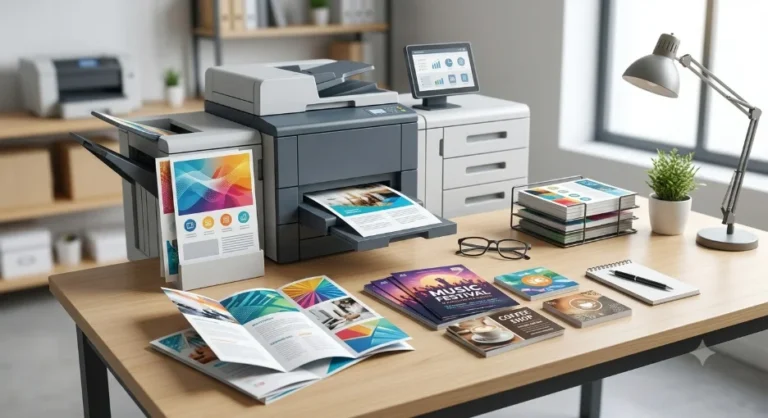
The workhorse of B2B brand communication. Brochures give brands room to explain their offer, demonstrate their positioning, and leave something behind after a sales conversation. Format choices: trifold, bifold, gatefold, affect both cost and the impression of sophistication.
Catalogs
For product-heavy brands, a catalog is a sustained brand experience. The reader spends time with it. Paper stock, photography quality, and layout all contribute to whether that time feels premium or generic.
Direct Mail
Direct mail is a brand touchpoint that arrives uninvited and has to earn its keep immediately. Format, finish, and the quality of the print production determine whether it gets opened or discarded. A well-produced direct mail piece stands out in the mailbox because most pieces are not well-produced.
Signage and Large Format
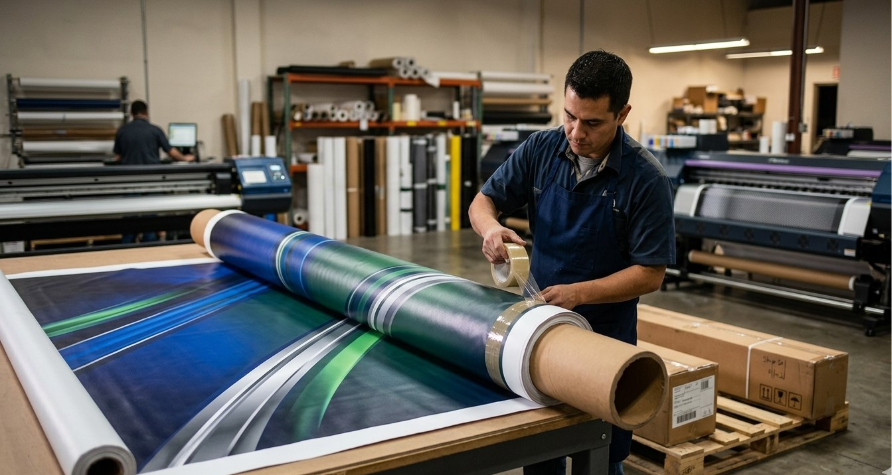
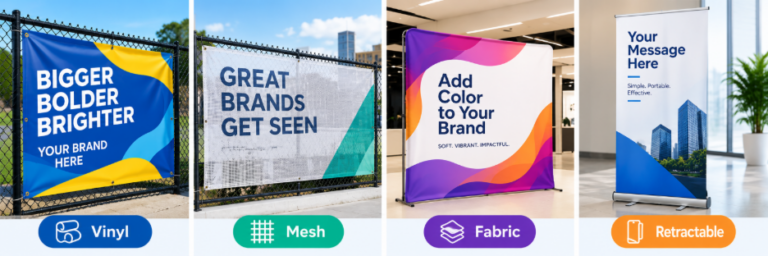
Trade show graphics, retail signage, window films, and building wraps are often the largest brand impressions a company makes. Color accuracy and print resolution at large scale are where commercial printing services quality shows most visibly. A color shift on a building wrap is a brand problem, not just a print problem.
Packaging
For product brands, packaging is the brand. It is the last impression before the customer opens what they bought and the first thing they see when the product arrives. Substrate choice, finishing, and structural integrity all affect how the brand lands at the point of unboxing.
Request a Commercial Printing Quote from NextPage →
3. How Commercial Printing Quality Signals Brand Value
Print quality is not just about how good something looks. It is about what the quality says about the brand.
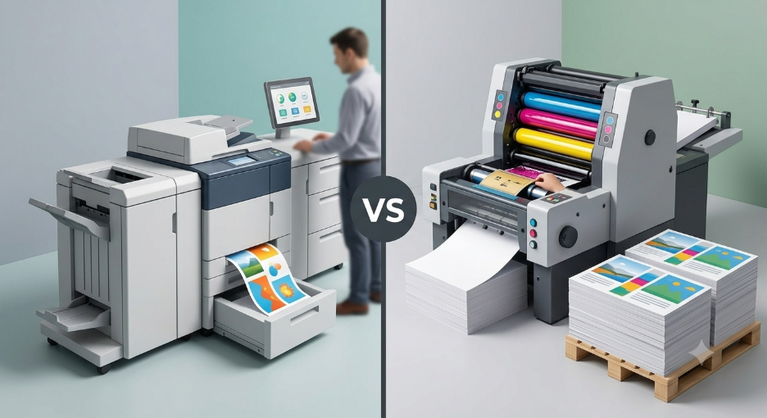
Color consistency is the most visible quality signal in commercial printing. When brand colors shift between formats, slightly different on the business card than on the brochure, noticeably different on the trade show banner, the brand looks unmanaged. G7 color management calibrates every press to a common standard, producing consistent color across offset, digital, and large format output regardless of the run size or production date.
Paper stock communicates value before the reader processes content. Heavier stocks feel more substantial. Soft-touch finishes create a tactile premium impression. Coated stocks make colors pop. Uncoated stocks read as natural and approachable. None of these is universally better, the right choice depends on what the brand needs to communicate.
Registration and detail matter in business printing that includes fine typography, small logos, or detailed photography. Poor registration, where color plates do not align perfectly produces soft edges and muddy detail. At scale, it signals that the brand does not hold itself to high production standards.
Consistency across runs is what separates a professional commercial printing services provider from a commodity printer. A brochure reprinted six months later should look identical to the original. If it does not, the brand has a consistency problem every time it hands out materials.
4. Custom Printing for Businesses: Making Every Piece Personal
Custom printing for businesses means different things at different scales.
At the most basic level, it means producing materials specific to the brand not using generic templates that could belong to any company. Custom design, custom colors, custom formats matched to the brand’s specific communication needs.
At a more sophisticated level, custom printing for businesses means using variable data printing (VDP) to produce materials that change per recipient within a single run. A brochure mailing where each piece carries the recipient’s name, a relevant product image, and an offer matched to their purchase history is a different thing from a standard brochure. The brand is the same. The communication is personal.
VDP is what separates commercial printing that builds relationships from commercial printing that broadcasts. A piece that speaks to the recipient specifically creates a different impression than one that could have been sent to anyone. That difference shows up in response rates, in engagement, and in how the brand is remembered.
NextPage’s VDP capability runs personalized campaigns at up to 400 feet per minute, meaning personalization at scale is not a production constraint.
Talk to NextPage About Print Materials for Your Brand →
5. Print and Digital: Brand Consistency Across Every Channel
The brand that appears on a printed brochure and the brand that appears on the company website need to be the same brand. Same colors. Same typography. Same tone. Same level of quality.
This sounds obvious. In practice, it breaks down regularly. Digital teams update the brand guidelines. Print materials produced six months ago no longer match. The website uses RGB values that shift when converted to CMYK for print. The trade show banner was produced by a different vendor who used a different color profile.
Brand consistency across print and digital requires two things. First, a defined brand standard that specifies print and digital values separately. Second, a commercial printing services partner who works from those standards rather than approximating them.
The connection between print and digital also works in the other direction. Printed pieces can carry QR codes that link to specific landing pages. PURLs track which recipients from a mailing visited the site and what they looked at. A trade show banner can carry a social handle that extends the brand relationship beyond the event. These integrations do not blur the distinction between print and digital. They use each channel for what it does best and connect them where it adds value.
6. Why NextPage for Commercial Printing Services
NextPage is a Kansas City commercial printing services provider producing offset, digital, large format, direct mail, and variable data print for brands, agencies, healthcare organizations, financial institutions, and nonprofits.
- G7 color management: Brand-accurate color across every format and every run.
- Full format range: Business cards to building wraps, produced in-house.
- Variable data capability: Custom printing for businesses at up to 400 feet per minute.
- Sustainable options: Recycled stocks and eco-friendly inks across all formats.
- Proven results: Ferrellgas doubled response rates. Habitat for Humanity achieved 270% conversion lift.
- End-to-end production: Design, printing, finishing, and mailing under one roof.
Learn About NextPage Variable Data Printing →
7. Frequently Asked Questions
What is commercial printing?
Commercial printing is the professional production of branded marketing materials at scale: business cards, brochures, catalogs, signage, direct mail, packaging, produced to brand specifications with consistent color and quality across every run.
How does commercial printing help build a brand?
Every printed piece the brand produces is a brand touchpoint. The quality of the paper, the accuracy of the colors, and the consistency across formats all signal whether the brand pays attention to detail. A well-produced piece builds credibility. A poorly produced one undermines it.
What print formats does NextPage offer for business printing?
NextPage’s business printing formats include business cards, brochures, catalogs, direct mail, large format signage, trade show graphics, packaging, and branded collateral: all produced in-house with offset, digital, and large format printing.
What is custom printing for businesses?
At its simplest, custom printing for businesses means materials designed and produced specifically for your brand rather than generic templates. At a more advanced level, it means variable data printing where each piece in a run carries unique content per recipient.
How do I maintain brand consistency across commercial printing and digital?
Define your brand colors in both CMYK (for print) and RGB/HEX (for digital) and specify both in your brand guidelines. Work with a commercial printing services provider that uses G7 color management to ensure print output matches your defined standards across every run and format.