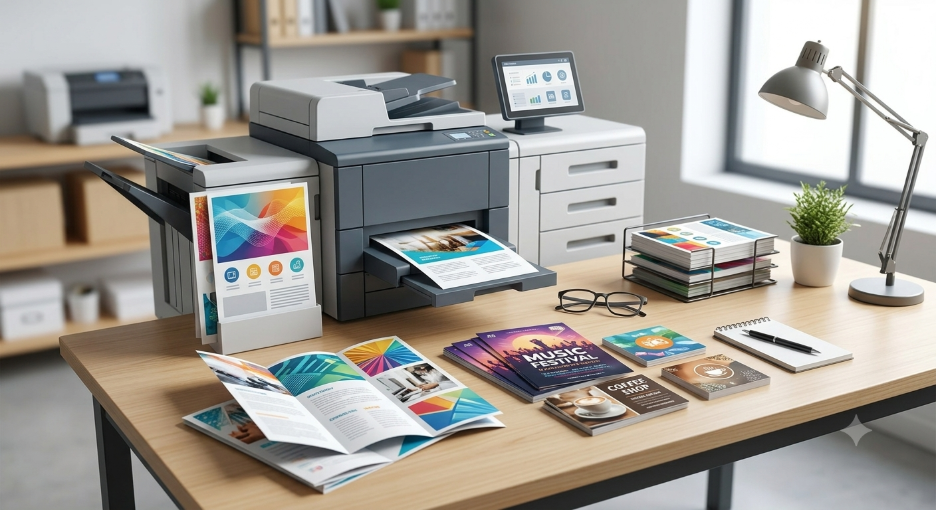

Every print project starts the same way: you have something to produce and a budget to produce it in. The question that follows — offset or digital — sounds technical, but it really comes down to three things: how many you are printing, whether every piece needs to be different, and when you need it.
Get the method right and you save money, hit your deadline, and get a better result. Get it wrong and you are either overpaying for a short run on an offset press, or compromising color consistency on a high-volume catalog that deserved better.
Key Takeaways
- Offset printing delivers richer, Pantone-accurate color at lower per-piece cost for high-volume identical runs.
- Digital printing requires no plates, starts faster, and supports variable data personalization per piece.
- Offset carries a fixed setup cost — the more pieces you print, the lower the per-piece cost becomes.
- Digital suits short runs, on-demand production, and campaigns where each piece needs to be unique.
- NextPage offers both and recommends the right method based on the job, not the press availability.
Table of Contents
3. Offset Printing vs. Digital Printing: Side by Side
4. Choosing the Right Printing Method for Your Business
5. Why NextPage for Commercial Printing
1. What Is Offset Printing?
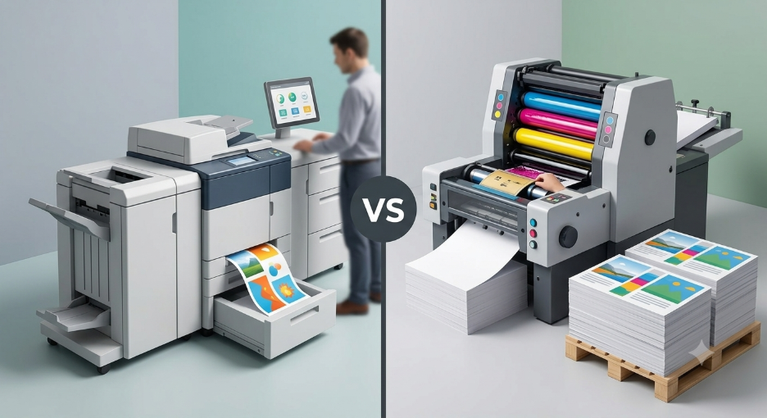
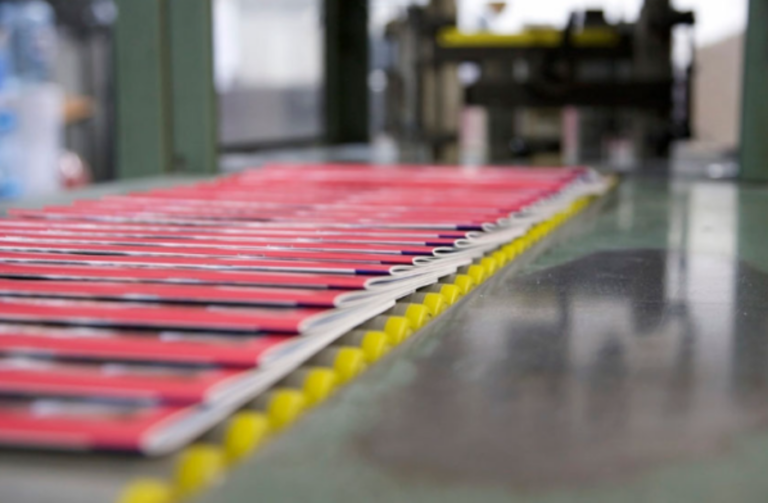
Think of offset printing as the workhorse of commercial print. Ink goes from a metal plate to a rubber blanket, and from the blanket onto the paper. One plate per color — four for standard CMYK, more if the job calls for Pantone spot colors.
The plates are made before the press runs, which means there is a setup cost upfront regardless of how many you print. But that cost gets thinner with every additional copy. That is why offset printing is the go-to for catalogs, brochures, packaging, and anything that needs to look exactly the same across a large run.
Key Advantages of Offset Printing
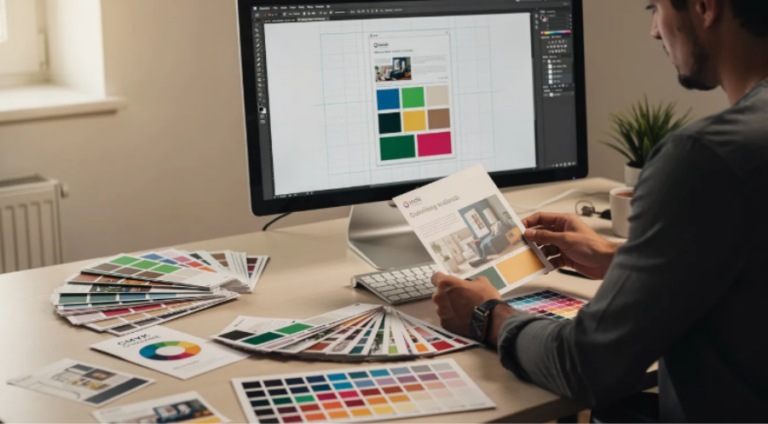
- Pantone-accurate color: If your brand has a specific red, it prints that red. Not close to it.
- Consistent quality: Every copy looks the same, whether you print 500 or 50,000.
- Better value at volume: Setup costs are fixed. The more you print, the cheaper each piece gets.
- More material options: Heavier stocks, textured finishes, specialty papers — offset handles them.
2. What Is Digital Printing?
Digital printing skips the plates entirely. The file goes straight to the press, the press runs, the pieces come out. No setup, no waiting — which makes it the right call when you need something fast or in smaller quantities.
What makes digital genuinely different is variable data. Every piece in the run can carry a different name, offer, image, or QR code without the press stopping. That is what makes it the method of choice for personalized direct mail and campaigns where a generic piece simply will not do the job.
Key Advantages of Digital Printing
- No setup cost: You pay for what you print, nothing more.
- Fast turnaround: File approved today, press running today.
- Variable data capability: Every piece in the run can say something different.
- On-demand production: Print 50 or 500 — no minimum, no overrun waste.
Talk to NextPage About the Right Method for Your Project →
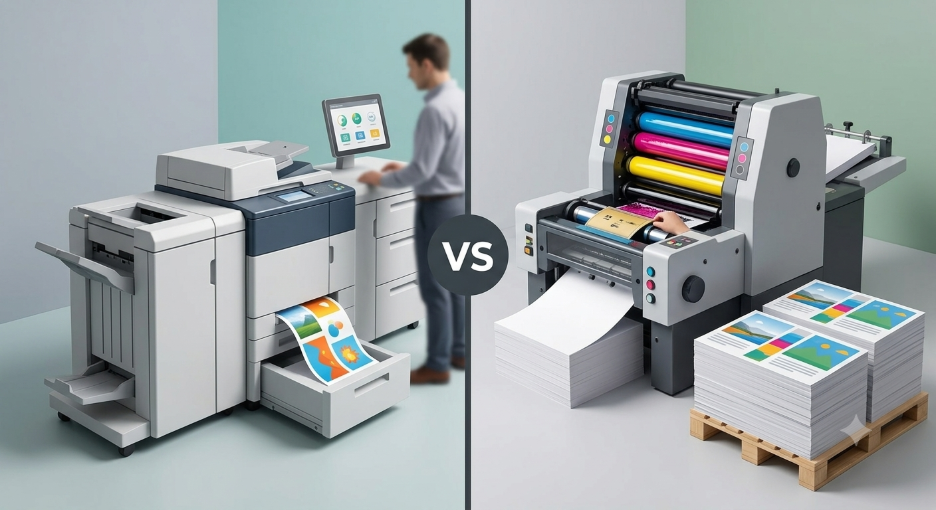
3. Offset Printing vs. Digital Printing: Side by Side
The table below cuts through the back-and-forth. Find your situation in the left column and you will know which press to use.
| Factor | Offset Printing | Digital Printing |
| Best for | High-volume, identical runs | Short runs, on-demand, personalized |
| Color quality | Rich, Pantone-accurate, consistent | Strong, best for shorter runs |
| Cost structure | Fixed setup plus low per-piece cost at volume | No setup cost, consistent per-piece rate |
| Turnaround | Longer: plate setup required | Fast: production starts immediately |
| Personalization | Not supported | Full variable data per piece |
| Substrate range | Wider range of paper and specialty stocks | More limited substrate options |
| Best applications | Catalogs, brochures, packaging, high-volume collateral | Direct mail, short runs, versioned content |
4. Choosing the Right Printing Method for Your Business
Three questions settle it almost every time:
- How many are you printing?
- High volume tips toward offset. Low volume tips toward digital.
- Does every piece need to be different?
- If yes, digital. Offset cannot do it.
- How tight is the deadline?
- Digital starts the moment the file is approved. Offset needs plate setup time first.
Color accuracy and substrate requirements can shift the answer, but for most businesses, volume and personalization make the decision before anything else does. Some campaigns use both — offset for a high-volume static piece and digital for a personalized insert within the same program.
Get a Commercial Printing Quote from NextPage →
5. Why NextPage for Commercial Printing
NextPage runs both offset and digital presses in Kansas City — so the recommendation you get is based on what fits the job, not what is available on the floor that week.
- Both methods in-house: One vendor for offset, digital, or a combination of both.
- State-of-the-art equipment: Consistent color and quality on every run.
- Variable data capability: Personalized campaigns at up to 400 feet per minute.
- Eco-friendly production: Sustainable materials, efficient processes.
- Full finishing and bindery: Embossing, die-cutting, folding, laminating.
- Fast turnaround: Tight deadlines met, quality intact.
Request a Quote from NextPage →
6. Frequently Asked Questions
What is offset printing?
A metal plate carries the ink, transfers it to a rubber blanket, and the blanket presses it onto the paper. That extra step — the offset — is what produces such clean, consistent color at scale.
What is the difference between offset and digital printing?
Offset needs plates. Digital does not. Offset printing suits jobs where every piece is identical and volume is high. Digital suits jobs where each piece is different or the run is small.
What is the offset printing cost compared to digital?
Offset costs more to start but less per piece as volume grows. Digital costs the same per piece whether you print 10 or 10,000. Short runs: digital wins. Long runs: offset printing wins.
What is the best printing method for small businesses?
Usually digital — lower minimums, faster turnaround, no setup cost. But if you need premium color and are printing in the thousands, offset printing is worth looking at.
Does NextPage offer both offset and digital printing?
Both, in-house, in Kansas City. Tell them what you need and they will tell you which press makes sense.