Until anything goes wrong, most companies don’t give their commercial printing partner much thought. The hues return to being off-brand. The deadline is not met. By the time the invoice is delivered, the quote has doubled. The campaign had already over at that point.
Selecting the best printing partner is one of those choices that subtly impacts your budget, marketing schedule, and brand consistency. If you get it properly, you won’t even need to think about the relationship. If you make a mistake, you will be managing fires rather than campaigns.
Before making a commitment, you should ask any commercial printing company the seven direct questions listed in this guide. These inquiries will provide you with all the information you require, whether you are assessing your first provider or reevaluating an existing one.
Table of Contents
1. What printing technologies do you offer?
2. Can you handle my volume and turnaround requirements?
3. How do you manage color accuracy and quality control?
4. What does your pricing structure actually include?
5. Do you offer finishing, mailing, and fulfillment services?
6. What is your experience in my industry?
7. Who will I be working with day to day?
8. Why Kansas City Businesses Choose NextPage
1. What Printing Technologies Do You Offer?
Every commercial printing business uses different equipment, and the technology they employ has a direct impact on what they can create for you. Know what’s available before you do anything else.
The three most prevalent technologies that you will come across are:
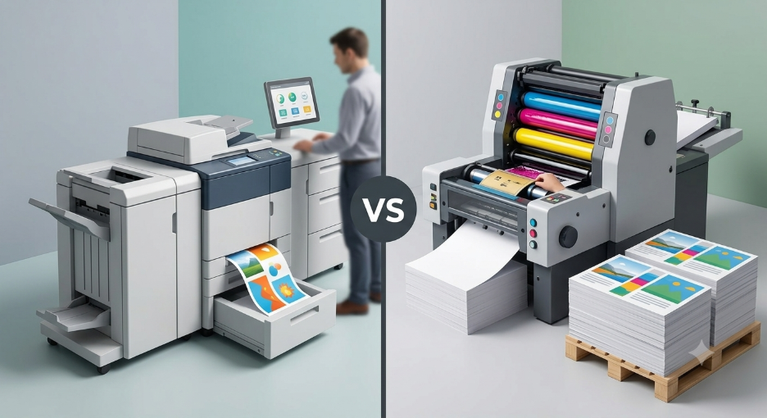
- Offset Printing: For large-volume runs where color accuracy and consistency are essential, offset printing works best. Consider brochures, catalogs, and upscale marketing materials.
- Digital printing: Perfect for customized materials, on-demand production, and shorter runs. Quick turnaround and free plate setup.
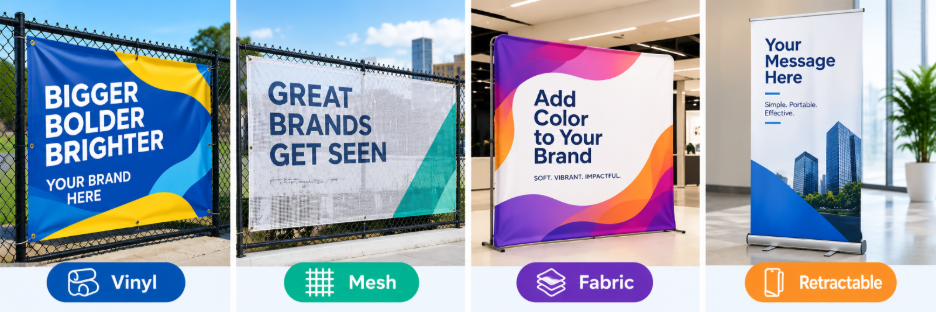
- Large-Format Printing: Designed for banners, posters, signage, and other items that require a large-scale physical impact.
A reliable commercial printing partner will provide more than one of these, and more significantly, they will advise you on which one best suits your needs rather than just choosing the one that works best for them.
Printing Technology at a Glance
| Technology | Best For | Run Size | Turnaround |
| Offset Printing | High-volume static collateral, brochures, and catalogs | Large runs (1,000+) | Moderate |
| Traditional Digital | Short runs, quick-turn proofs, on-demand collateral | Small to medium | Fast |
| Production Inkjet | High-volume personalized direct mail, data-driven variable campaigns | Medium to massive runs | Fast |
| Large-Format | Banners, signage, event displays, large panels | Any size | Fast to moderate |
Note: The lines between offset and digital are blurring. Advanced printing partners now utilize Production Inkjet, which delivers the high-volume speed and crisp quality of traditional offset, but with the 100% variable data personalization of digital. If a printer tells you that you have to sacrifice personalization for a high-volume run, you’re talking to the wrong printer.
2. Can You Handle My Volume and Turnaround Requirements?
A commercial printing company is a liability rather than a partner if they are unable to consistently achieve your volume or timeframe. This question distinguishes between vendors who can meet your needs and those who won’t be able to.
Specifically, ask:
- How much can you print in a month?
- Have you already worked on projects of this size?
- If equipment fails, what will happen to my job?
- How long does it often take you to complete tasks this size?
The best commercial printing company for your organization is not one that fits you in as an afterthought, but one that has extra capacity. You can know something if they are unable to provide detailed answers to these queries.
Get a Custom Quote from NextPage →
3. How Do You Manage Color Accuracy and Quality Control?
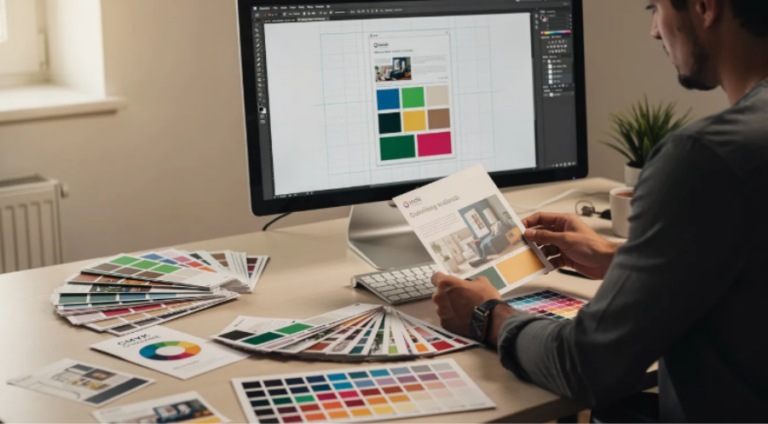
One of the most frequent issues organizations encounter with commercial printing services is brand color accuracy. Even when a shade appears flawless on screen, it may appear very different in print, especially after several print runs.
What to search for:
- Do they make use of calibrated equipment and color management systems?
- Can they give press releases prior to a full run?
- Are they able to match Pantone for colors that are important to their brand?
- How do they handle reprints when the quality isn’t up to par?
Quality control is a process rather than a checkbox. A reliable commercial printing partner will be open and honest about their defined quality control practices. Assume they don’t if they are unable to explain how they maintain consistency. NextPage’s facility is uniquely situated in the SubTropolis, offering distinct climate-controlled storage advantages for paper inventory and fulfillment.
4. What Does Your Pricing Structure Actually Include?
Cost-per-piece pricing is rarely used in commercial printing. The final invoice may differ greatly from the opening quote due to setup fees, proofreading fees, plate prices, finishing add-ons, and shipping.
Prior to approving any proposal, make sure you understand:
- Do setup and plate fees include with the package or are they separate charges?
- How much do proofs and revisions cost?
- Are the laminating, die-cutting, and folding finishing options itemized?
- What are the costs for delivery and shipping?
- Is a rush fee structure in place, and if so, what causes it?
The best commercial printing business will provide you with an itemized, comprehensive quote up front rather than a lowball figure meant to lure you in the door. Before continuing, request a line-by-line explanation if a quote seems ambiguous.
5. How do you bridge the gap between our digital marketing data and physical mail?
NextPage isn’t just putting ink on paper; we specialize in omnichannel “phygital” marketing, identity resolution, and data-driven direct mail (e.g., matching digital intent data to physical mailboxes)
After they’re done, think about whether they can manage:
- Mailing and direct mail fulfillment: delivery, postal optimization, addressing, and list management
- Inventory control and warehousing for continuing print initiatives
- Printing variable data for customized campaigns
- Assembling and kitting multi-component packages
It is more effective and lowers the possibility of mistakes at handoff points to work with a single vendor who manages the entire production chain. It’s one of the most obvious indicators of a reliable business printing partner as opposed to a transactional print shop.
Explore NextPage’s Full-Service Printing Capabilities →
6. What Is Your Experience in My Industry?
Commercial printing jobs are not all the same. A retail company making seasonal promotional inserts has different compliance standards than a hospital organization printing patient education materials. Experience in the industry is important.
Request:
- Examples of projects completed for companies in your industry
- References from customers with comparable project kinds or quantities
- knowledge of any legal, financial, or healthcare regulations that apply to your industry
- Knowledge of working with materials or formats unique to your use case
Without need a lot of hand-holding, the best commercial printing company for your corporation will comprehend the subtleties of your industry. The majority of the conversation should come from their portfolio.
7. Who Will I Be Working With Day to Day?
The smoothness of the relationship is determined by this question, which most businesses neglect to ask. There are numerous moving components in commercial printing projects, including scheduling, delivery, approvals, proofing, and file submission. On their end, who oversees such procedure?
Learn:
- Will you have a project coordinator or account manager on staff?
- What are their response times and communication standards?
- If something goes wrong, how are problems escalated?
- From brief to delivery, is there a single point of contact?
What distinguishes a reliable commercial printing partner in the US from a vendor you’re continuously pursuing is the availability of responsive, informed individuals. The finest collaborations don’t feel like a service desk, but rather like an extension of your own team.
8. Why Kansas City Businesses Choose NextPage
- State-of-the-art presses that deliver consistent color and quality across every run
- Eco-friendly production with sustainable materials and efficient processes
- Print strategies built around your brand goals, not generic templates
- Fast turnarounds that hold up even when deadlines are tight
- One team supporting your project from the first conversation to final delivery
The availability of responsive, knowledgeable people is what sets a best commercial printing partner apart from a provider you’re constantly pursuing. The best partnerships feel more like an extension of your own team than a service desk.
Request a Quote from NextPage Today →
9. Frequently Asked Questions
What should I look for in a commercial printing company?
Look for a commercial printing company that offers multiple printing technologies, transparent pricing, strong quality control processes, and dedicated account support. Industry experience and full-service capabilities — including finishing and mailing — are strong indicators of a reliable partner.
How do I know if a commercial printing partner is reliable?
Ask for references, review their portfolio, and request a detailed quote before committing. A reliable commercial printing partner will be transparent about their processes, responsive in their communication, and consistent in their output across multiple projects.
What is the difference between offset and digital commercial printing?
Offset printing uses physical plates and is best for high-volume runs where color accuracy is critical. Digital commercial printing skips the plate process, making it faster and more cost-effective for shorter runs, personalized pieces, and on-demand production.
How many commercial printing services should a vendor offer?
A full-service vendor should offer at minimum offset, digital, and large-format printing, plus finishing options and direct mail capabilities. The broader their commercial printing services, the less you’ll need to manage multiple vendors for different project types.
Is it worth paying more for a higher-quality commercial printing company?
In most cases, yes. Cheaper commercial printing often comes with hidden costs — missed deadlines, color inconsistencies, or poor finishing that reflects badly on your brand. The right partner pays for itself in consistency, reliability, and materials you’re confident putting in front of customers.