Summary box: Variable data printing is best for campaigns where the message, offer, image, QR code, or call to action should change based on the recipient. It is most valuable when marketers have clean data, defined audience segments, and a measurable response goal.
Most marketers do not think about personalization until a campaign falls flat.
The list was solid. The design was clean. The offer was competitive. But the response rate did not move — because every recipient got the same thing, regardless of who they are or what they actually need.
Variable data printing can fix that — when the data, offer, creative, and production workflow are aligned. It is the technology that makes every printed piece in a campaign unique — different offer, different image, different message — produced in a single print run, at scale, without slowing production.
Variable data printing increases response rates because it changes the message, offer, imagery, and call to action based on the recipient — not just their name. That distinction is what separates personalization that performs from personalization that is merely cosmetic.
Table of Contents
1. What Is Variable Data Printing?
2. What Can Be Personalized? Types and Data Fields
3. How Does Variable Data Printing Work?
4. Results and Proof: What VDP Actually Delivers
5. Common VDP Mistakes to Avoid
6. Lessons From Thousands of Campaigns — and Who Uses VDP
7. Why Kansas City Businesses and Marketing Teams Choose NextPage
1. What Is Variable Data Printing?
Variable data printing (VDP) is a digital printing process that produces a unique, customized version of every piece in a print run — changing text, images, offers, QR codes, and calls to action per recipient without stopping the press or running separate jobs.
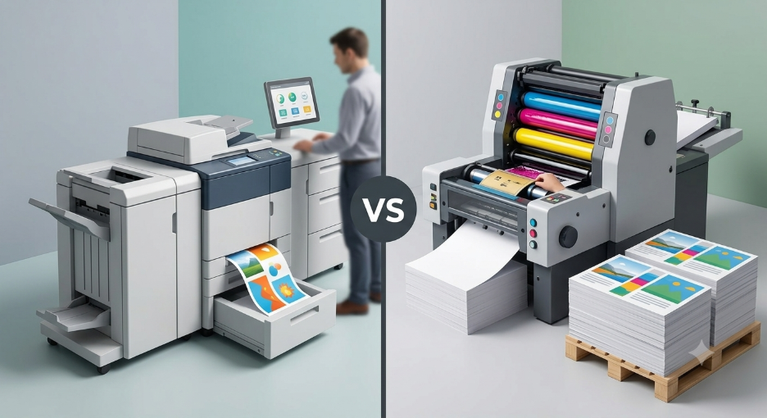
Unlike offset printing — which uses fixed plates and produces identical copies — VDP uses digital presses and data-driven templates to render each piece differently. The brand design stays consistent. The personalized content changes for every recipient. A campaign of 50,000 mailers can contain 50,000 unique versions.
36%
Higher response rates for personalized mail vs. generic mail — USPS Household Diary Study
2. What Can Be Personalized? Types and Data Fields
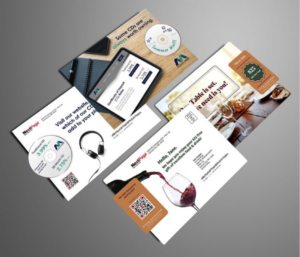
Most marketers assume variable data printing means swapping a name. That is the least of what it can do. VDP can change any element tied to a data field:
- Variable text — Names, location-specific copy, individualized messaging, and personalized offers.
- Variable images — Product photography or creative assets that change based on purchase history or segment.
- Variable QR codes and PURLs — Unique codes and personalized URLs linking each recipient to a custom landing page for precise response tracking.
- Dynamic coupons — Unique barcodes or promo codes per recipient, enabling redemption tracking and fraud prevention.
- Triggered mail — Pieces generated automatically in response to a behavior — a purchase, a lapsed subscription, or a missed appointment.
Common data fields that drive personalization:
| Data Field | Personalization Example |
| Name | Personal salutation and in-body reference |
| Location / City | Kansas City — localized copy, nearest branch or store |
| Previously Purchased Product | Replenishment reminder or complementary offer |
| Last Donation Amount | Suggested next contribution based on giving history |
| Account Type or Tier | Segment-specific messaging for premium vs. standard customers |
| Last Activity Date | Win-back messaging triggered by lapsed engagement |
| Unique QR Code / PURL | Personalized landing page linked to individual recipient |
Talk to NextPage About What Your Data Can Do →
3. How Does Variable Data Printing Work?
Variable data printing works by merging a structured data file with a dynamic design template, then running both through a digital press that renders each piece uniquely. Three components are required: clean data, a flexible template, and a digital press capable of per-piece variation.
- Data preparation — Lists are validated and cleaned. Names, addresses, purchase history, and segment tags are structured before template population begins.
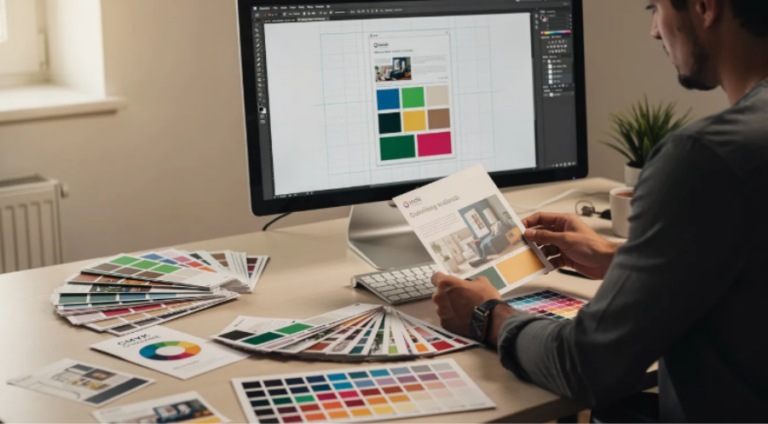
- Template design and merge — Designers build a master layout with reserved zones for variable content. Software maps each data field to its placeholder, generating a unique file per record. Automated proofing catches conditional logic errors before production.
- Digital printing and mail delivery — The press renders each piece individually in one continuous run — no plate changes, no separate jobs. Finished pieces are postal-optimized per USPS requirements and tracked through delivery.
4. Results and Proof: What Variable Data Printing Actually Delivers
Personalization is not a creative preference. It is a measurable performance driver. In many campaigns, consolidating data preparation, print production, mailing, and postal optimization with one partner can reduce delays, limit handoffs, and improve campaign control.
35%
Faster campaign turnaround for NextPage clients using integrated VDP and direct mail production
25%
Average reduction in print fulfillment costs using NextPage’s consolidated production model
98%
Repeat satisfaction rate among NextPage agency and enterprise partners
“NextPage’s integrated on-site production ensures that our direct mail and email campaigns are deployed quickly, while meeting Hallmark’s exact branding and quality standards.” — Carol C., Hallmark
Third-party data supports the case for personalized print marketing:
- Personalized direct mail achieves response rates of 5–9% for house lists, vs. under 1% for most digital channels (Data & Marketing Association)
- Direct mail ROI averages 29–35%, outperforming paid search and social media in long-term conversion (Association of National Advertisers)
NextPage has applied these results across healthcare, financial services, retail, and nonprofit campaigns. Recent case studies include:
- IP Targeting for Nonprofit fundraising — using past donor data to drive continued giving
- Profile-Specific IP Targeting for a major Kentucky charitable foundation — personalized outreach to current donors at scale
- Hospital print cost efficiency — a 125-year-old pediatric medical center with 8,000+ employees across Kansas and Missouri
Explore NextPage Case Studies →
5. Common Variable Data Printing Mistakes to Avoid
VDP campaigns fail for predictable reasons — most of which have nothing to do with the printing itself.
Bad Data Quality
Dirty data is the leading cause of VDP failure. Outdated records, duplicates, and missing fields produce pieces that are irrelevant at best and damaging at worst. A mailer addressed to “Dear [FIRST NAME]” destroys credibility instantly.
Generic Offers Disguised as Personalization
Adding a name to a generic mailer is mail merge — not personalization. Effective VDP changes the offer, the image, and the message. If the only variable is the salutation, the campaign will perform like a generic mailer, because it is one.
Skipping Proofing
A static proof only shows one version. VDP requires reviewing multiple versions — including edge cases where variable fields are unusually long or empty. Skipping this step is the single most avoidable mistake in VDP production.
The most common VDP mistake is treating personalization as a design decision rather than a data decision. The offer has to change. The image has to change. The relevance has to be real.
6. Lessons From Thousands of Campaigns — and Who Uses VDP
Across thousands of variable data print campaigns, the most effective personalization often extends beyond a recipient’s name. Segment-specific offers, personalized messaging, QR codes, and PURLs consistently create more relevant experiences and stronger attribution.
Purchase history and last activity date consistently outperform demographic fields as personalization drivers. Financial services, healthcare, and nonprofit fundraising show the highest lift — high-consideration categories where a relevant message at the right moment drives action a generic one does not.
Variable data printing is used across every major industry:
- Retail and e-commerce — Replenishment reminders, loyalty mailers, and upsell campaigns built from purchase data.
- Financial services — Statement inserts and product offers segmented by account type, tier, and activity.
- Healthcare — Appointment reminders and patient outreach personalized by care history and geography.
- Nonprofit and education — Donor appeals and alumni outreach segmented by giving history and engagement level.
- Agencies and enterprise teams — Multi-brand, multi-segment campaigns with consistent color standards and fast turnaround.
Request a VDP Readiness Assessment from NextPage →
7. Why Kansas City Businesses and Marketing Teams Choose NextPage
Headquartered in Kansas City, NextPage is a commercial printing and direct mail marketing company built specifically for data-driven, personalized direct mail printing — serving healthcare systems, regional banks, credit unions, nonprofits, universities, retail organizations, and agencies across the region and nationally.
TheirOur VDP printing services sit within a complete production environment: offset and digital printing, large-format, direct mail, print finishing, kitting, fulfillment, and mailing — all managed in-house. Campaigns do not get delayed at vendor handoff points, and brand standards do not degrade between production stages.
What sets NextPage apart:
- Diamond-Level Partner of the American Bankers Association — an earned designation reflecting years of compliance-sensitive, data-driven print production for financial institutions
- USPS optimization built into every direct mail campaign — reducing postage costs, minimizing returned mail, and maximizing deliverability
- Strict data security practices from list intake through post-production disposal — essential for campaigns involving financial, healthcare, or donor data
- Industry recognition for print innovation, sustainable production, and campaign performance
- 35% faster campaign turnaround and 25% average reduction in print fulfillment costs for clients using NextPage’s integrated production model
For marketing teams searching for reliable variable data printing services in Kansas or the Missouri metro, or looking for an execution partner near me — NextPage manages the full production chain from start to finish. You don’t need to piece together multiple vendors to launch a single campaign.
From our centrally located production facility, we eliminate multi-vendor friction and scale campaigns seamlessly. We proudly serve marketing teams searching for high-performance variable data printing services regionally, including: Arkansas, Nebraska, Iowa, and Oklahoma.
Talk to NextPage About Your VDP Strategy →
8. Frequently Asked Questions
What is variable data printing?
Variable data printing is a digital printing process that customizes each piece in a print run with unique text, images, offers, QR codes, or messages — all produced in a single run. It allows marketers to deliver one-to-one personalized print at scale using existing customer data.
What is the difference between variable data printing and mail merge?
Mail merge changes the name and address on an otherwise identical piece. Variable data printing changes the offer, image, message, QR code, and call to action based on the recipient’s full data profile. Mail merge is often cosmetic. VDP becomes substantive when the offer, image, message, and response path change based on the recipient.
Is variable data printing more expensive than standard printing?
Per-piece costs are slightly higher than offset printing. However, personalized campaigns consistently deliver higher response rates and stronger ROI. NextPage clients have reported 25% reductions in overall print fulfillment costs through consolidated VDP and direct mail production.
What data do I need to start a VDP campaign?
At minimum: name, mailing address, and one segmentation field such as purchase history or account type. NextPage’s VDP printing services include data validation and cleaning — your list does not need to be perfect before the campaign begins.
Can variable data printing be connected to digital marketing?
Yes. Personalized direct mail printing produced with VDP can include unique QR codes and PURLs linking each recipient to a customized digital landing page — enabling cross-channel tracking, omnichannel integration, and direct measurement of print response against digital conversion.