
Most marketing teams print on offset. Still fewer can explain what actually happens between the time the file is submitted and the finished stack of brochures arrives on the doorstep.
That knowledge gap is important. Understanding how offset printing works will help you make better decisions about production, ask your print partner better questions, and avoid the spec mistakes that lead to costly reprints.
In this tutorial, we’ll explain the offset printing process in plain English, compare it to digital printing, explain what it’s best used for, and how to identify when it’s the correct choice for your next campaign.
Table of Contents
2. How Does the Offset Printing Process Work?
3. Offset Printing vs. Digital Printing
4. What Can Be Printed with Offset Printing?
5. Why Choose NextPage for Offset Printing Services?
1. What Is Offset Printing?
Offset printing is a commercial printing process in which ink is transmitted from a metal plate to a rubber blanket and then to the print surface. The ink never comes in direct contact with the plate. The name “offset printing” comes from this indirect transference of ink.
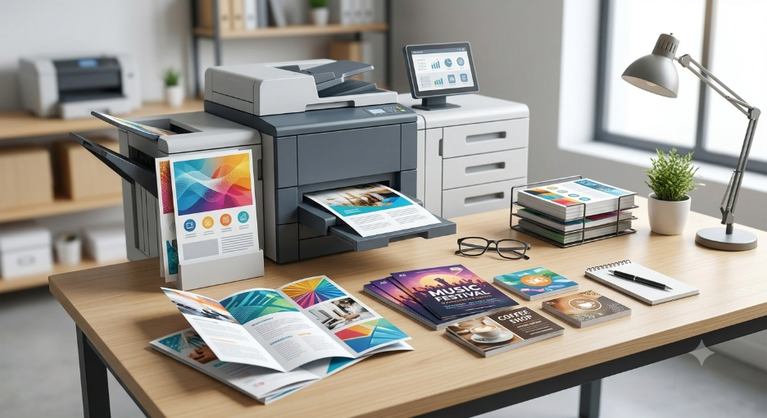
It’s the primary technology for high-volume, brand-important commercial printing. Offset presses are typically used to produce catalogs, brochures, periodicals, packaging, and high-end marketing collateral. The rationale is simple: nothing else consistently compares in color fidelity, clarity, and quality over big runs.
Offset printing produces identical copies. One plate for each color, inked through the press, produces thousands of duplicates out the other end: each one just like the one before it. For brands whose consistency across 10,000 brochures is as important as the first, such stability is worth a lot.
Note: Offset printing is not faster or simpler than digital printing. Plate setup takes time. What you get in return is richer color, sharper detail, and rock-solid consistency at scale — advantages that get more valuable the higher your volume goes.
2. How Does the Offset Printing Process Work?
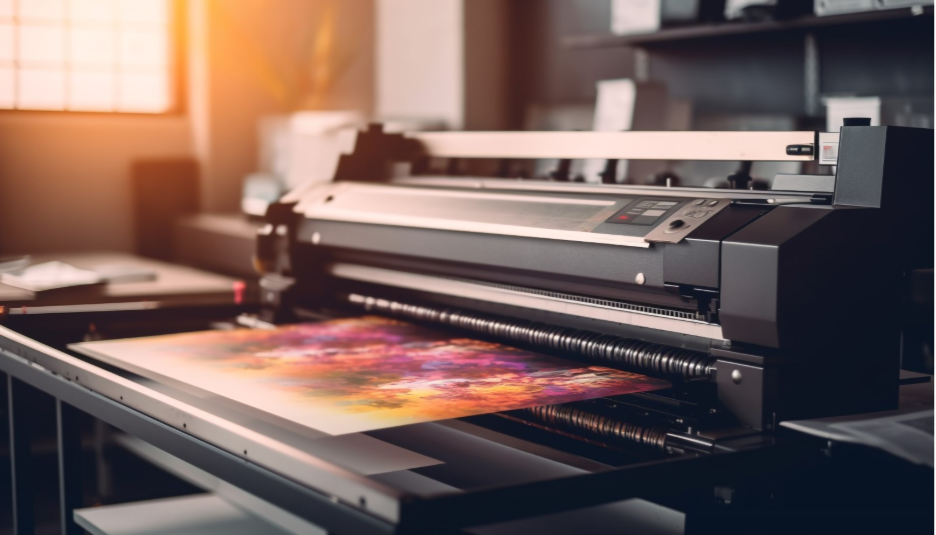
The offset printing process involves several distinct stages. Each one affects the quality and accuracy of the finished piece.
Step 1: File Preparation and Prepress
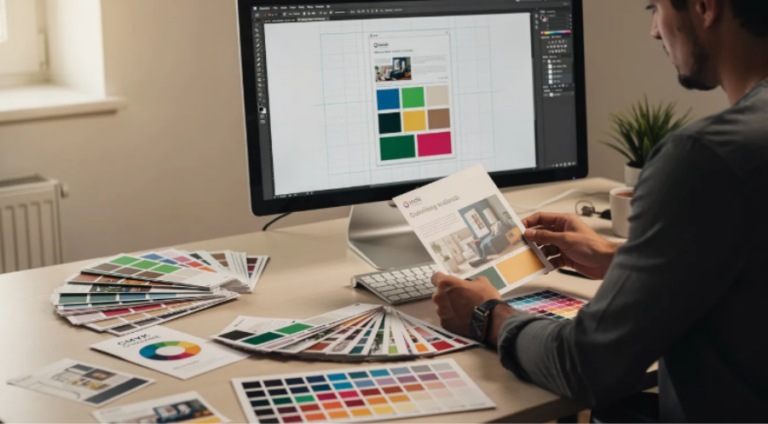
The digital file is readied for production before the ink hits the paper. This stage is prepress, and this is where you check color mode (CMYK is a must for offset), check resolution, check bleed and safe zone measurements, and check fonts and associated files.
This is prepress, where most manufacturing faults are caught—or not caught. Please send a file in RGB, at low resolution or without bleed; this will cause problems at the press that cannot be fixed without a reprint.
Step 2: Plate Making
The accepted file is then used to create printing plates, one for each color. Standard offset printing services employ four plates, one for each of the four process colors (cyan, magenta, yellow, and black, or CMYK). If the work requires colors specific to a brand, additional Pantone spot color plates are manufactured.
Each plate is a thin aluminum sheet coated with a photosensitive material. Then the image is burned into the plate by exposing it to a laser, generating places where the ink will be attracted and repelled. Plate manufacture is a set cost; it happens once per project no matter how many copies you print.
Step 3: Press Setup and Make-Ready
The plates are fastened to the cylinders of the press. The water and ink systems are calibrated. Test sheets are run and examined for color accuracy, registration (alignment of each color layer), and consistency.
This step is known as make-ready. It takes time and waste sheets to get the press tuned in. That fixed setup cost is why offset printing gets cheaper as volume goes higher—the make-ready cost is shared across more units.
Step 4: Printing
Once the press is set, it runs itself. Each plate rolls ink onto a rubber blanket cylinder that then rolls the ink onto the paper or other material. The procedure is repeated at great speed—offset presses may turn out thousands of sheets per hour with consistent color and registration throughout the run.
Offset printing generates a smoother, more equal coating of ink than many other methods because the ink is transferred to the printing surface through a blanket rather than straight from the plate. This is a big cause for its depth and purity of color at scale.
Step 5: Drying and Curing
The ink needs to dry/cure before you can start finishing the printed sheets. Heat-set offset uses heat to swiftly evaporate ink solvents. In sheet-fed offset, depending on the substrate and the type of ink, the ink is usually air-dried or cured by UV. If this stage is rushed, setoff will occur, where ink will transfer from one sheet to another in the stack.
Step 6: Finishing and Bindery
Finishing is the process that turns the printed sheets into the finished product. Finishing options for offset printing services include cutting, folding, embossing, die cutting, lamination, and binding.
Finishing impacts the layout of the artwork on the sheet; hence, each finishing procedure must be defined before the plates are produced. This is also where the initial cost of offset printing is meaningless at high volume. Plate fabrication and make-ready are fixed, but the cost per piece lowers significantly as the run expands.
Talk to NextPage About Your Offset Printing Project →
3. Offset Printing vs. Digital Printing
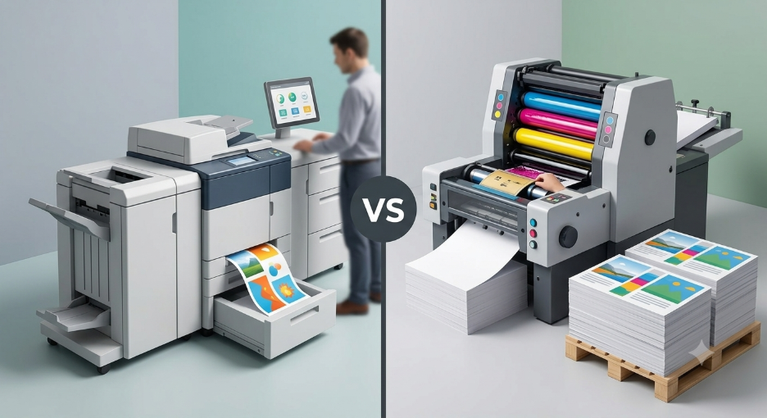
Both offset printing and digital printing show capability of commercial printing methods. The right choice is dependent on the volume, timeline, color demands, as well as the need for personalization.
| Factor | Offset Printing | Digital Printing |
| Best volume | 1,000 pieces or more | Under 1,000 pieces |
| Color quality | Rich, Pantone-accurate, consistent | Strong, slight variation at high volume |
| Cost structure | Fixed plate setup, low per-piece cost at scale | No setup cost, consistent per-piece rate |
| Turnaround | Longer: plate setup required | Fast: production starts immediately |
| Personalization | Not supported: identical copies only | Full variable data per piece |
| Substrate options | Wider range of paper and specialty stocks | More limited substrate range |
| Best applications | Catalogs, brochures, packaging, high-volume collateral | Short runs, direct mail, on-demand, versioned content |
The point isn’t that one way is superior to the other. It’s about what matches the role. A 50,000-piece run of a catalog should use an offset press, while a 300-piece personalized direct mail campaign should be produced on a digital press. Some campaigns utilize a combination of both, offset for a high-volume static component, and digital for a tailored insert or reply device.
4. What Can Be Printed with Offset Printing?
High volume, color-critical, brand-facing If a print job meets all three criteria, offset printing services are almost guaranteed to be the appropriate call:
- Brochures and Catalogs: Large runs for color matching.
- Business Cards & Stationery: Crisp Detail on Premium Stocks.
- Fliers & Inserts: Single sheets in high numbers for mail, retail, or events.
- Packaging: Specialty finishes on color-critical boxes and labels
- Posters & Signage: Bright, sturdy pieces for lengthy runs.
- Annual reports and corporate materials: High-end publications that represent the brand.
5. Why Choose NextPage for Offset Printing Services?
NextPage is a commercial printer and direct mail marketer situated in Kansas City. It offers offset printing services for local and national enterprises, agencies, healthcare organizations, financial institutions and nonprofits.
All offset printing projects are done on the most modern presses with skilled techniques. The goal is always the same: color that is true to the brand, finishes that match the quality of the product and pieces delivered on time, no surprises.
- State-of-the-art equipment: Consistent color and quality throughout every run.
- Sustainable production: Eco-friendly materials, efficient methods.
- Custom solutions: Tactics designed to meet your brand goals.
- Fast turnaround: Quality not sacrificed, tight deadlines achieved.
- Top-notch service: Professional help from idea to implementation.
- Complete finishing and binding: Embossing. Die-cutting. Folding. Lamination.
Request an Offset Printing Quote from NextPage →
6. Frequently Asked Questions
What is offset printing?
Offset printing is a commonly used printing technique in the commercial printing industry. In this technique, the ink is not directly transferred to the printing surface. It provides consistent, high-quality copies in bulk and is the benchmark for big-volume, brand-critical print output.
What is the offset printing process?
The offset printing process is a six-step procedure. These are file preparation and prepress, plate fabrication, press setup and make-ready, printing, drying and curing, and finishing and bindery. Each step has an effect on the quality and accuracy of the final product.
When should I use offset printing services instead of digital printing?
If you’re ordering 1,000 or more and color consistency, Pantone precision, and fine detail are important, use offset printing services. For small runs, fast turnaround, on-demand production, or bespoke campaigns where each piece needs to be different, use digital printing.
Why does offset printing cost more upfront than digital printing?
Offset printing requires plate making and press make-ready before production begins. These are fixed costs that do not change with volume. At high quantities, the per-piece cost drops well below digital. At low quantities, digital is more cost-efficient because there are no setup costs.
What offset printing services does NextPage offer in Kansas City?
NextPage provides offset printing in Kansas City for brochures, catalogs, business cards, fliers, inserts, packaging, signs, and corporate publications. We produce all projects in-house, utilizing state-of-the-art presses, skilled craftsmanship, and complete finishing and bindery capabilities.